
Boston lock & key help
Lock rekeying in Boston, MA
Want different keys without replacing suitable locks? Discuss rekeying in Boston, including move-ins, missing keys and changes in who needs access.
Change key access, not every part
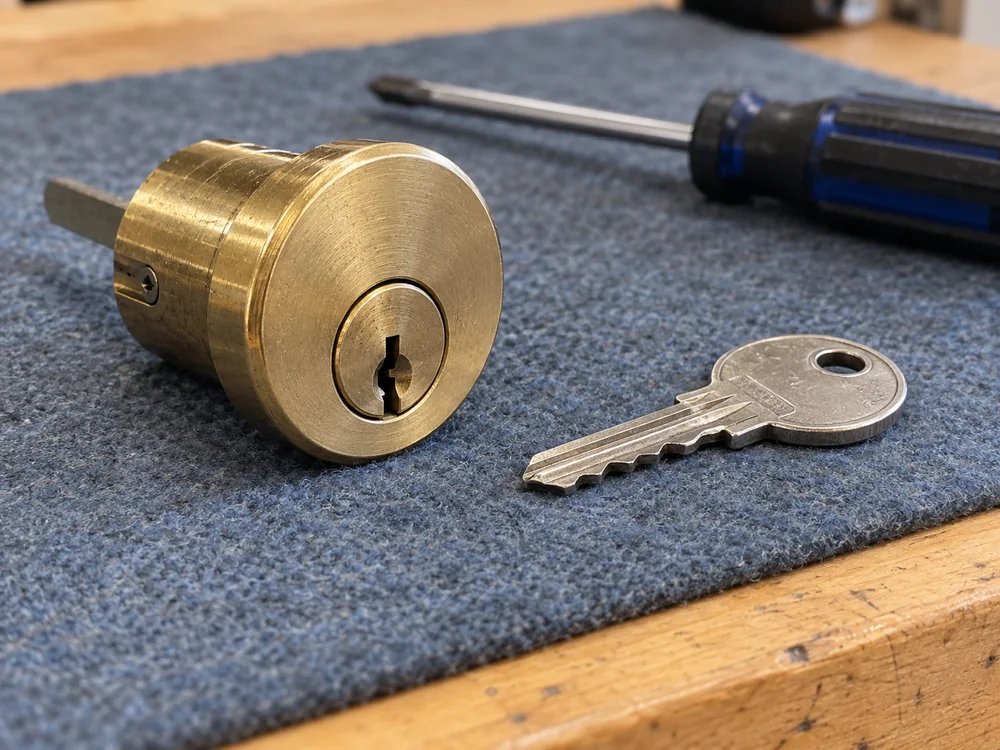
Rekeying changes the key that operates a suitable lock while retaining the main hardware. It can be useful after a move, a lost-key incident or a change of keyholders when the lock itself is still in good condition.
It is not the same as copying a key, and it does not fix a loose handle, a damaged mechanism or a door that will not line up. Mention those symptoms as part of the request.
Check suitability before choosing
The existing lock design and condition determine whether rekeying is an option. If you want several doors on one key, their hardware must be compatible. Shared and master-key arrangements can also affect what can be changed.
Count the doors and locks involved and identify which keys currently work in each. A front door with two separate locks may involve more than one cylinder; describe what is fitted instead of guessing a single-lock price.
Decide who should have access afterwards
Think about the people who need keys once the work is complete. For a shared building or business, coordinate the plan with the authorized manager so a change does not unintentionally disrupt other occupants.
Discuss the scope and estimate before proceeding. If inspection finds damaged or unsuitable hardware, ask what that means for repair or replacement and the total.
Worth knowing.
Is rekeying always cheaper than replacement?
The comparison depends on the hardware, number of locks and work needed. Ask for the scope and estimate for your setup rather than assuming one option always costs less.
Will rekeying fix a lock that sticks?
Changing key access does not necessarily resolve wear, damage or door alignment. Describe the sticking problem so it can be considered separately.